

Power used at home
Solar electricity used inside the home while it is produced can reduce utility purchases. Exported electricity receives the utility's applicable credit.

You already pay for electricity every month. The question is whether putting that money toward solar leaves you better off over time. Here's how to find out.
Savings only mean something compared with what you'd pay without solar. Start with the bill baseline, then use a complete proposal to compare the solar path.
Enter your monthly bill to see the current annual cost and a simple reference that assumes the bill never changes. This does not calculate a solar payment or savings.
This arithmetic holds today's bill flat for context. It is not a utility forecast, solar quote, production estimate, or savings claim. A solar comparison requires actual usage, production, utility rules, equipment, incentives, financing, and remaining charges.
Replace assumptions with real numbers ↗A fair comparison carries both paths out over 25 years, including rate increases, panel output, financing, and the utility charges that remain after solar.
Conceptual framework only. No future utility rate or solar result is guaranteed.Open-ended expense
Contract-specific cost path
Solar electricity used inside the home while it is produced can reduce utility purchases. Exported electricity receives the utility's applicable credit.
Cash, loan, lease, and power purchase agreements have different prices, payment changes, fees, and ownership terms. No single payment structure applies to every offer.

Illinois Shines and utility rebates can lower your net cost when your home and contract qualify.

Cash, a loan, or a lease can produce very different results on the exact same roof. The structure matters as much as the system.
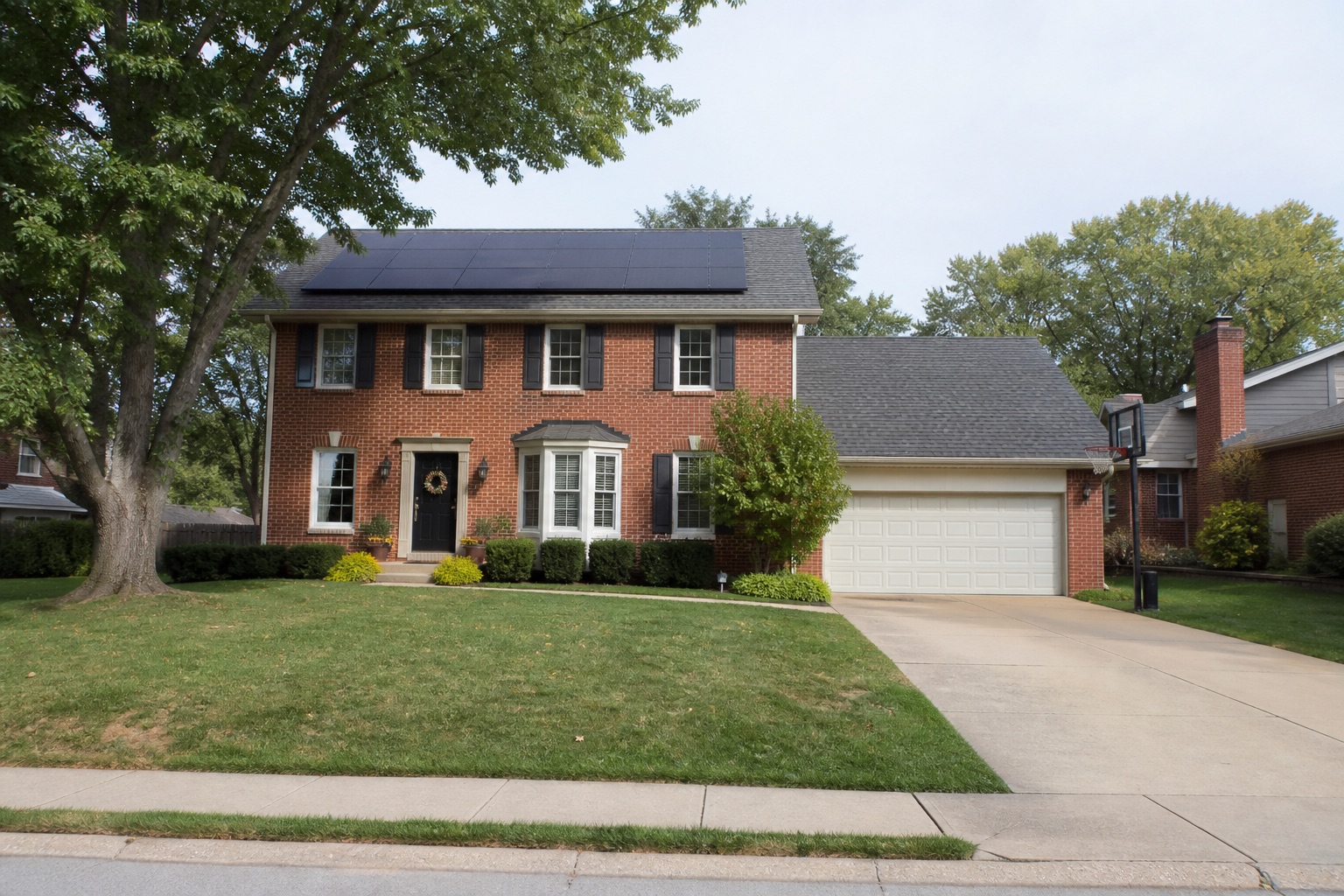
Rooftop solar across an Illinois neighborhood.
Heavy shade, an aging roof, limited usable space, or bad contract terms can turn good technology into a bad purchase. If that's your situation, we'll tell you.
See if my home makes senseThe headline number matters less than the assumptions and total cost behind it. Here's what to look for.
Browse every FAQThat depends on the installed price, financing structure, current utility bill, production, incentives, and remaining grid charges. A useful comparison shows annual cash flow and cumulative results, not only the first payment.