
The bill is translated into annual kilowatt-hours before a system is sized.
Start with this householdA clear solar conversation,
A clear solar conversation,
built around this home.
This walkthrough gives us a shared view of the bill, the roof, the options, and what happens next. It is a planning conversation, not a contract.
Current electric utility
No pressure. The goal is to leave with a better answer, even if that answer is “not yet.”
1) Current energy baseline
Start with the bill being paid today.
Your electric usage determines the starting size of the solar conversation. Twelve months of bills gives the clearest view; one average bill gives us a rough first pass.
$220/month
$80$600+
What this tells usUsage Utility Baseline
Rates, fixed charges, and local rules determine how solar appears on the bill.
Future comparisons should use the same real household starting point.
This input creates an illustration for the conversation. A proposal requires actual usage history and utility data.
2) Home solar fit
The roof changes the answer.
Solar is not priced or designed from square footage alone. Roof age, sun exposure, usable planes, electrical service, and local requirements all shape the plan.
What happens next
A site survey verifies what we discuss at the table.
No single answer here automatically disqualifies the home. It tells the design team what needs to be verified before final engineering.
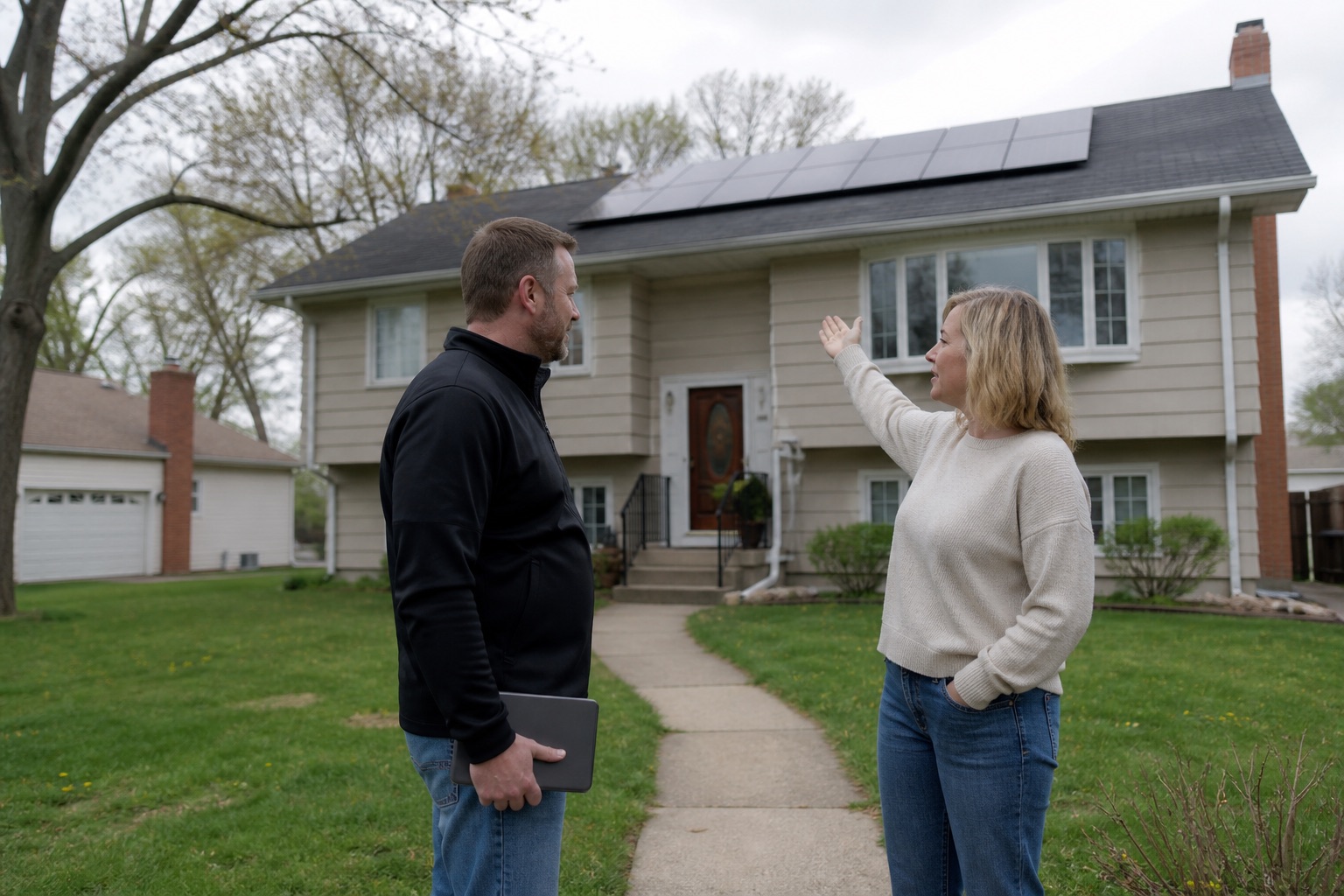
Home-specific designOne home.
One energy plan.
One energy plan.
3) Project plan01 02 03 04
DSP keeps the moving parts clear.
Direct Solar Pros guides the homeowner through the decision and coordinates the project. Qualified partners complete the on-site technical work.
DSP analyzes
Usage, roof information, incentives, and ownership options.
You decide
Whether the design, economics, and long-term tradeoffs make sense.
Partners build
Survey, engineering, permits, installation, inspection, and connection.
DSP stays involved
A consistent point of contact as the project moves forward.
5) Next steps
Here’s what we learned.
A useful consultation ends with the open questions written down, not buried under a pitch.
Household snapshot
- Homeowner
- Not entered
- ZIP code
- Not entered
- Electric utility
- Not selected
- Average bill
- $220/month
- Primary goal
- Lower the monthly bill
- Roof age
- 0–10 years
- Shade
- Mostly open sun
Verified starting point
$2,640current annual bill baseline
Not estimatedsolar payment or savings
A proposal must replace the missing usage, roof, production, utility, incentive, financing, and remaining-charge assumptions.